Green spaces like parks, golf courses, and residential lawns and ornamental plants are pervasive throughout urban landscapes and can offer a multitude of conservation and human health benefits. As urbanization and human population growth progress, the benefits these spaces and plants provide will become increasingly important, as will the way we manage them. We are interested in identifying strategies to maximize the biodiversity conservation value of urban landscapes while suppressing key pests, protecting plant health, and providing realistic solutions and opportunities for professionals.
Recent Publications:
Warner LA, Kalauni D*, Diaz JM, Marois E, Daniels JC, Dale AG. 2024. Changes take place in stages! A gradational perspective on the influence of homeowners associations on the adoption of wildlife-friendly landscape maintenance. Environment and Behavior. 00139165241284741.
Mach BM¥, Glynn SE§, Daniels JC, Dale AG. 2024. Target and non-target effects of insecticide use during ornamental milkweed production. Environmental Entomology. 53 (4), 648-658. https://doi.org/10.1093/ee/nvae056
Kalauni D*, Warner LA, Diaz JM, Daniels J, Dale AG, Marois E. 2023. Formative audience research to increase consumer demand for professional wildlife-friendly landscape maintenance. Urban Forestry & Urban Greening. 90, 128152. https://doi.org/10.1016/j.ufug.2023.128152
Nickerson C, Krebs C, Warner LA, Baker L, Daniels JC, Dale AG. 2023. Attitudes toward and preferences of Florida consumers and growers regarding a proposed scientifically based university certification process for wildlife-friendly plants. HortTechnology. 33(5), 470-476. https://doi.org/10.21273/HORTTECH05230-23
Mach BM¥, Long W§, Daniels JC, Dale AG. 2023. Aphid infestations reduce monarch butterfly colonization, herbivory, and growth on ornamental milkweed. PLOS ONE. 18 (7), e0288407. https://journals.plos.org/plosone/article?id=10.1371/journal.pone.0288407
Krebs CL*, Warner LA, Baker LM, Daniels JC, Dale AG. 2022. Innovative Industry: Environmental horticulture professionals’ perceptions on wildlife-friendly plants and a potential certification offering. Journal of Applied Communications. Vol. 106: Iss. 3. https://doi.org/10.4148/1051-0834.2413
Nestle R*, Cope GC, Benda ND, Dale AG. 2021. Creating wildflower habitats in golf course out-of-play areas. UF IFAS EDIS #ENY2059. https://edis.ifas.ufl.edu/in1316
Nestle R*, Daniels JC, Dale AG. 2020. Mixed-species gardens increase monarch oviposition without increasing top-down predation. Insects. 11(9), 648; https://doi.org/10.3390/insects11090648 [LINK]
Dale AG, Perry RL*, Cope GC(§), Benda N(¥). 2020. Floral abundance and richness drive beneficial arthropod conservation and biological control on golf courses. Urban Ecosystems. 23(1), 55-66. https://doi.org/10.1007/s11252-019-00907-0
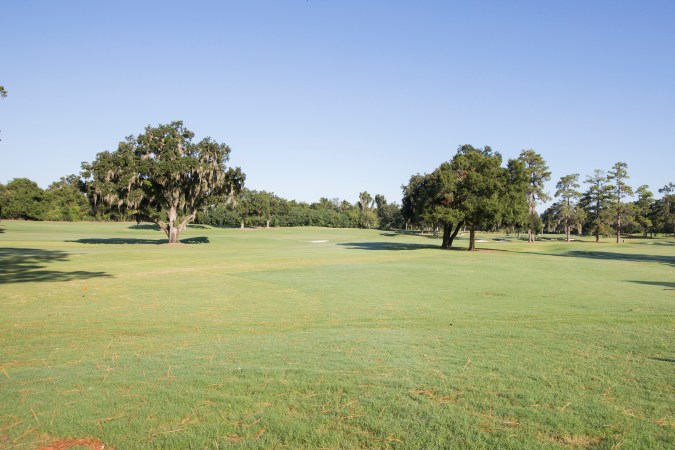
Underutilized, but maintained, out-of-play turfgrass on golf courses may have potential to provide other functions. (PHOTO – BEFORE) Credit: Tyler Jones, UF/IFAS Communications
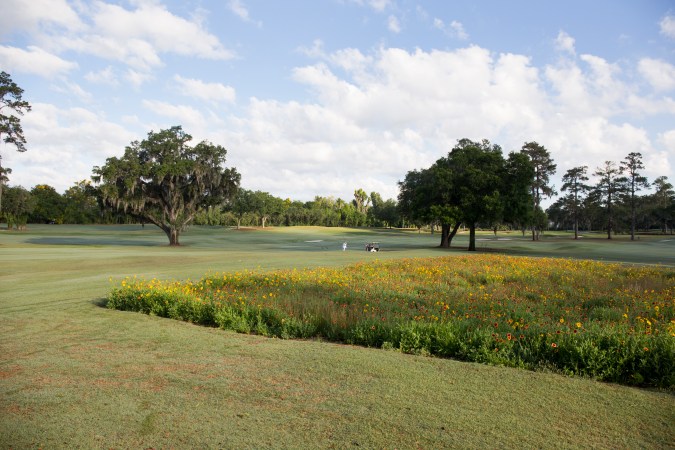
Converting out-of-play turfgrass to floral habitats may conserve pollinators, promote natural pest control, and reduce maintenance inputs. (PHOTO – AFTER) Credit: Tyler Jones, UF/IFAS Communications
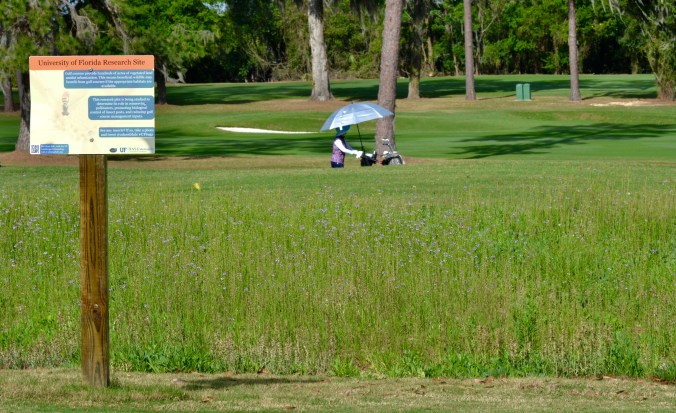
Wildflower plot adjacent to fairways and tee box began flowering in early March 2017 – Photo: A.G. Dale
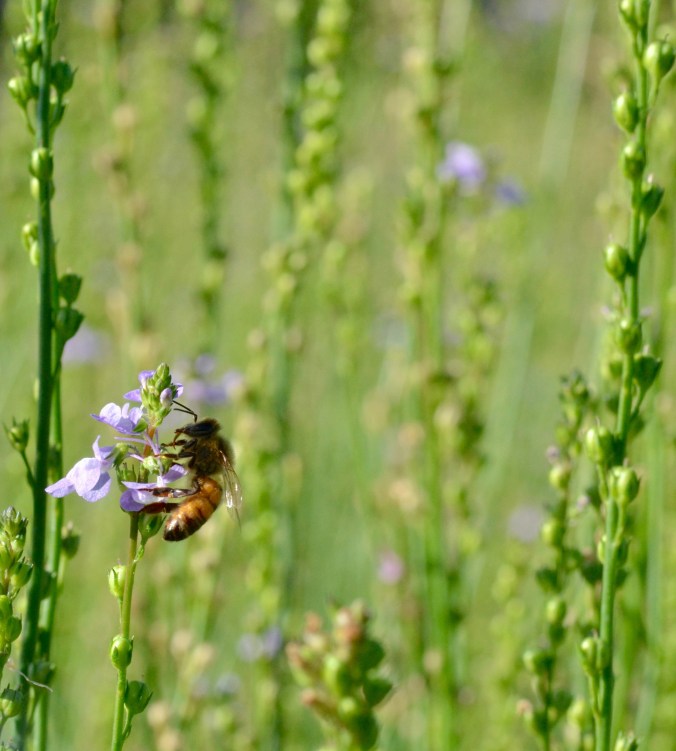

These plots are attractive to pollinating and predatory insects, conserving wildlife that provide multiple services.
 Urban Landscape Entomology